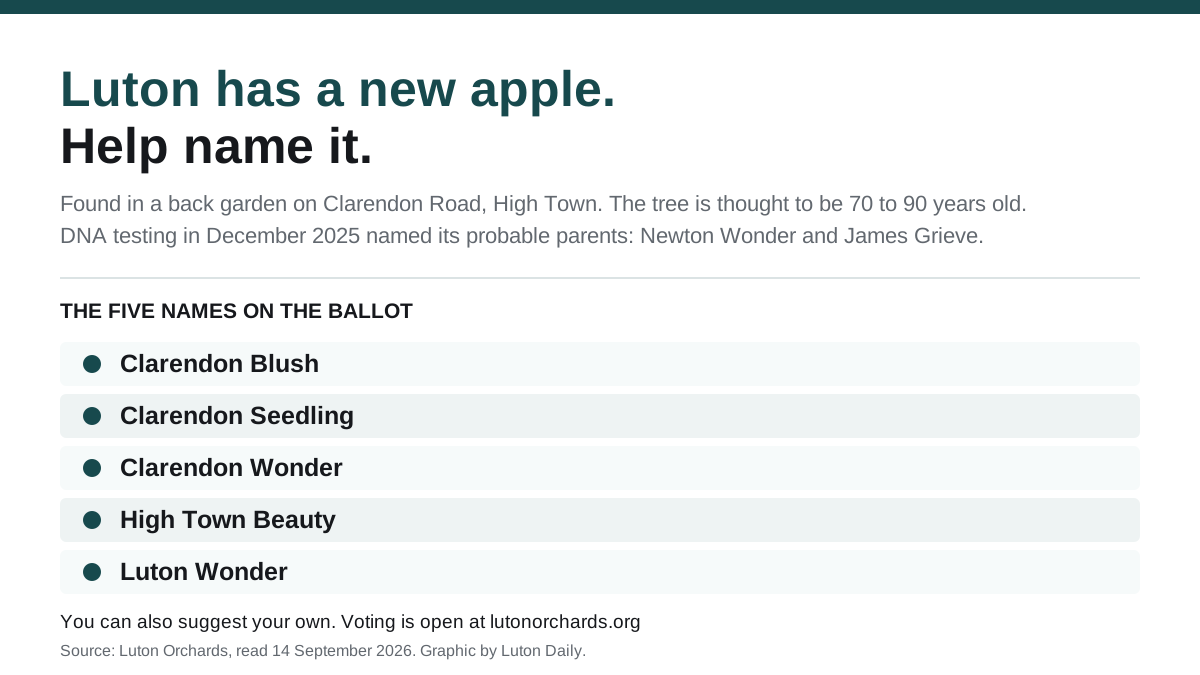

A previously unknown apple has been found on a Clarendon Road tree thought to be 70 to 90 years old. Luton Orchards wants you to rank five names.
There is an apple growing in a back garden in High Town that nobody had ever recorded before, and Luton now gets to name it.
Luton Orchards says the tree, on Clarendon Road, produces a variety that laboratory DNA testing confirmed in December 2025 to be a new cultivar. Its probable parents are two 19th century apples, Newton Wonder and James Grieve. The group thinks it is most likely a chance seedling from an amateur gardener.
The apple can now be registered as a new variety. First it needs a name, and Luton Orchards is asking residents to choose one.
The five names
The group took advice from Peter Laws at FruitID, who works on the DNA scheme and on registering new local apple varieties. Five names are on the ballot, based on where the apple comes from, what it looks like and what its parents were:
- Clarendon Blush
- Clarendon Seedling
- Clarendon Wonder
- High Town Beauty
- Luton Wonder
You rank them in order of preference, and you can enter your own suggestion instead. The voting form is here. Luton Orchards has not published a closing date.
What the apple is actually like
This is not a novelty. Luton Orchards describes it as an early dual-purpose apple, good for both eating and cooking. The fruit is lemon-yellow with a red and orange flush, and the skin carries a striped blush and prominent lenticels, the small pores an apple breathes through.
The group’s own note on the taste is refreshingly unvarnished. It changes a lot with ripeness, “from sharp to lovely to a little winey once they’re overripe”, and it cooks down well into a puree.
Nobody knows who planted the tree
The tree is thought to be between 70 and 90 years old, which puts it somewhere in the 1930s to 1950s. Beyond that, the record runs out.
Luton Orchards says research by a family historian and conversations with previous residents have not established who planted it or why. What it does have is the map evidence: historic Ordnance Survey maps show fruit trees in the area around it, from a time when they were common in Luton gardens.
That is the point of the wider project. Luton Orchards has mapped and documented orchards across the borough, from Bide-a-While and Farr’s Orchard to the People’s Park community orchard and the Luton Hoo walled garden, using old OS maps, tithe maps and oral histories.
Two things you can do this autumn
The group is running its apple amnesty until Thursday 8 October. If you have a tree with more fruit than you can use, it will take the surplus and have it pressed into juice commercially, with any income going back into community gardening in Luton.
- Penrose Roots2Recovery Garden, New Bedford Road, by the metal gate opposite Cranleigh Gardens, LU3 1LL: Monday, Tuesday and Thursday, 10am to 3pm
- 43 Kingston Road, LU2 7RZ: mornings and evenings any day, left at the bottom of the front steps
Donate 10kg or more, with your contact details tucked into each bag, and you get a free bottle of juice. Apples must be ripe and reasonably unbruised. No crab apples, and the group is aiming for no more than 20% cookers in the mix so the juice stays balanced. If you have a large harvest, it may be able to come and help you pick, but you have to register first.
Last year’s batch was 642 bottles, the biggest the group has made.
Then there is Luton’s Mini Apple Day, on Saturday 10 October, 11am to 3pm, at Stockingstone Riverside Meadow, LU2 7DD, at the bottom of Stockingstone Road opposite the cricket field. Entry is free. There is apple pressing, apple tasting, crafts, games, cakes and acoustic music, and the first bottles of the 2026 juice go on sale there.
Practical details for the day:
- Nothing needs booking in advance, except the guided walk, where you add your name to the list at the Wildlife Trust’s table on arrival
- Bring change for drinks, cakes and juice
- The nearest bus stop is on New Bedford Road, served by routes 35, 41, 78, 79, 81 and 755
- On-street parking in Cranleigh Gardens and Fountains Road; Wardown Park car park is a five-minute walk
- Everything is outdoors, so heavy rain or strong winds could cancel it
The event is run by the Wilder Luton team from the Bedfordshire, Cambridgeshire and Northamptonshire Wildlife Trust, with Edible High Town, Luton Orchards and Penrose Roots. Last year’s first apple day in decades drew about 110 people.
What it means for you
If you live in Luton, you get a vote on the permanent name of a fruit variety that will carry this town in the national record. That is not a thing most places get to do.
More immediately: if you have an apple tree in the garden and the fruit is going to waste, the amnesty closes on 8 October, and the drop-off at Penrose Roots is open three days a week until then.
More to do across the borough is in things to do in Luton, and if you are driving to Stockingstone Road, parking in Luton has the council car park tariffs.
Frequently asked questions
How do I vote on the name of the new Luton apple?
Luton Orchards has put five names on a ranking form: Clarendon Blush, Clarendon Seedling, Clarendon Wonder, High Town Beauty and Luton Wonder. You rank them in order of preference, or enter your own suggestion. The form is linked from the group’s new Luton apple variety page. No closing date has been published.
Where can I donate surplus apples in Luton?
At the Penrose Roots2Recovery Garden on New Bedford Road, LU3 1LL, on Mondays, Tuesdays and Thursdays from 10am to 3pm, or at 43 Kingston Road, LU2 7RZ, mornings and evenings any day. The amnesty runs until Thursday 8 October 2026. Donate 10kg or more with your contact details in the bag and you get a free bottle of juice.
When and where is Luton’s Mini Apple Day?
Saturday 10 October 2026, 11am to 3pm, at Stockingstone Riverside Meadow, LU2 7DD, at the bottom of Stockingstone Road. Entry is free and nothing needs booking except the guided walk.
Sources
- Luton Orchards, New Luton apple variety, read 14 September 2026
- Luton Orchards, Donate to the Luton Apple Amnesty, read 14 September 2026
- Luton Orchards, Luton Mini Apple Day, read 14 September 2026
- Luton Orchards, What’s on, read 14 September 2026
Have your say