
Eleven Boxing Day walks near Luton, from Wardown Park to Dunstable Downs and Sharpenhoe Clappers, with parking, cafe hours and distances. Updated November 2026.
Luton has eleven Boxing Day walks worth getting out of the house for in 2026, and this guide puts them in one place with start points, parking, cafe hours and how far each is from the town centre. Most people stay close to home and walk round Wardown Park or climb Warden Hill for the view back over the town. For a proper day out, Dunstable Downs has its cafe open from 10am to 3pm on Boxing Day, and Sharpenhoe Clappers has the beech wood on the Iron Age hill fort. Every route was checked against its owner’s own pages on 15 November 2026.
Overview
Boxing Day 2026 is a Saturday, and the bank holiday moves to Monday 28 December. What to know before you go:
- Light. The sun sets at about 4pm, so start the longer walks by 1pm.
- Trains. East Midlands Railway runs no trains on 26 December, most other operators run none, and the Luton DART is closed on 25 and 26 December. Our Luton Christmas trains and travel page has the detail.
- Cafes. On the National Trust’s published hours, The View Cafe on Dunstable Downs is open from 10am to 3pm on Boxing Day. None of the other walks below has a cafe with Boxing Day hours published yet.
- The light trails are shut. Stockwood Illuminated and the Luton Hoo Christmas light trail are both closed on 25 and 26 December, so a walk cannot end at either that evening. Both are open again on Sunday 27 December.
- Mud. Chalk paths on the downs turn slippery when wet, and the Wildlife Trust warns that the Totternhoe tracks are muddy in winter. Wear boots.
- Cattle. Galley and Warden Hills and Blow’s Downs are grazed in winter. Keep dogs close.
Walks in Luton
1. Wardown Park
The easy Boxing Day walk in Luton, a short walk up New Bedford Road from the town centre. The council describes the park as a Grade II listed historic park and garden, prized for its mix of Victorian and Edwardian landscape design, with Wardown House at its centre.
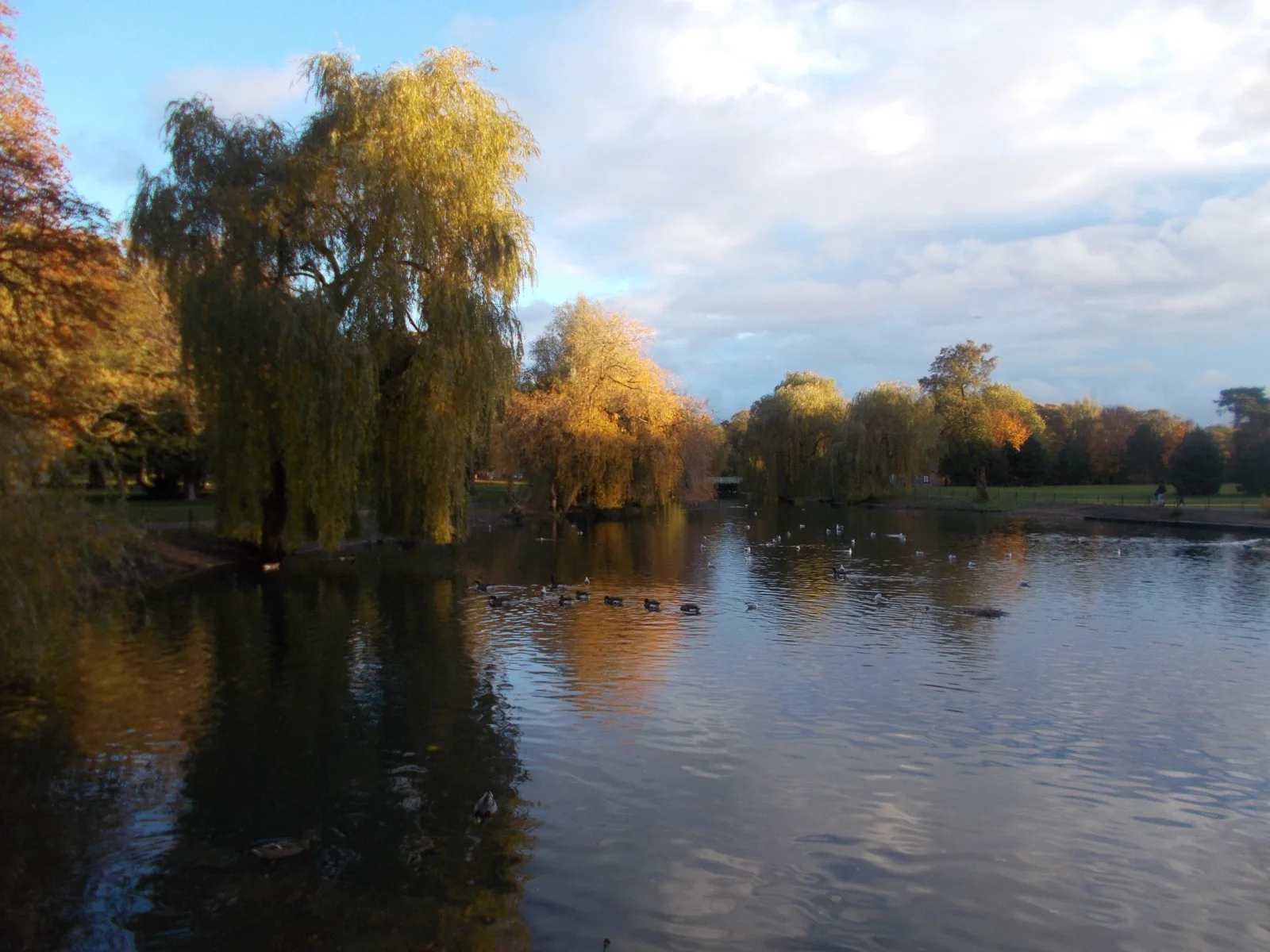
A lap of the boating lake takes in the suspension bridge, built in 1908 and, the council says, believed to be one of the shortest in the country; it was repainted in 2025. The lake itself is silted up, and the council applied to the National Lottery Heritage Fund in August for money to restore it, with an answer expected in December.
The Lea Valley Walk passes through the park on its way south.
Address New Bedford Road, Luton LU2 7EY
Toilets yes, on the council's list of park facilities
Cafe kiosk in the park; Boxing Day hours not published
Access level paths round the lake
Website luton.gov.uk/leisure-parks-culture/find-park-open-spaces/wardown-park
Good for lake, suspension bridge, buggies, short outing, play area
2. Leagrave Park and the source of the River Lea
The River Lea starts here. Leagrave Park, a Green Flag Award site, holds the springs that the council says begin the river’s 83-kilometre run to the Thames and the London 2012 Olympic Park, beside the Neolithic earthwork of Waulud’s Bank.
It is also the first step of the Lea Valley Walk, which runs about 50 miles to the Thames. Leigh Hatts, who wrote the guidebook, puts the first stretch from Leagrave into Luton at 4 miles and calls it “remarkably rural”, with the chance of a kingfisher.
With no trains on Boxing Day, walk it out and back, or loop the park and the earthwork in under an hour.
Address Sundon Park Road, Luton LU3 3AE
Distance about 3 miles from the town centre; Leagrave to Luton on the Lea Valley Walk is 4 miles one way
Access grass and surfaced paths in the park; the riverside path beyond can be wet
Website luton.gov.uk/leisure-parks-culture/find-park-open-spaces/leagrave-park
Good for river source, Neolithic earthwork, play area, longer linear walk
3. Galley and Warden Hills
Luton’s first nature reserve and the best view of the town, on the chalk at its northern edge. The council’s page names over 20 species of butterfly in summer and cattle grazing the slopes through autumn and winter, which is when Boxing Day walkers will meet them.
History runs right across the hill: Drays Ditches at the foot of Warden Hill were dug in the Bronze Age as tribal boundaries and built up in the Iron Age to control traffic on the Icknield Way, and two Bronze Age barrows sit near the top of Galley Hill. The largest held 14 burials, and in the Middle Ages a gallows stood on one of them.
The council says the hills are a favourite spot for watching the sunset, which on Boxing Day comes at about 4pm.
Address Galley and Warden Hills Nature Reserve, LU2 7AJ
Parking small car park off Links Way, by the reserve entrance; room on Warden Hill Road when it is full (Wildlife Trust)
Access steep chalk grassland, slippery when wet
Website luton.gov.uk/planning-building-control/planning/land-premises/biodiversity-nature-conservation/nationally-significant-wildlife-sites/galley-warden-hills-sssi
Good for views over Luton, sunset, Bronze Age barrows, Icknield Way, cattle in winter
4. Stockwood Park and Kidney Wood
The longest walk inside the town, at the southern edge off London Road. Stockwood Park covers about 100 hectares and was part of the Crawley family estate from 1708 until the council bought it in 1945; the house came down in 1964.
The council lists a tree-lined avenue from Farley Hill to where the house stood, the remains of the ha-ha, old boundary walls and the Lawn Path, an ancient right of way through the park. Next door, Kidney Wood is ancient woodland and a County Wildlife Site, with a marked nature trail and natural play areas, and the council directs walkers to park at Stockwood.
The Culture Trust has not published Christmas opening for Stockwood Discovery Centre, so do not count on its toilets or cafe.
Address London Road, Luton LU1 4LX
Parking free car park at Stockwood Discovery Centre (The Culture Trust)
Distance about 1 mile from the town centre
Website luton.gov.uk/leisure-parks-culture/find-park-open-spaces/stockwood-park
Good for woodland walk, nature trail, historic parkland, natural play, family outing
5. Wigmore Valley Park
The east Luton choice, near the airport: more than 70 acres of open grass and woodland, which the council says is popular with families and dog walkers for its wildlife area. It is one of the few walks here with free parking and toilets both on the council’s list, which makes it an easy hour with children after a big lunch.
There is a skatepark and a play area for anyone who brought a new scooter.
Address 66 Eaton Green Road, Luton LU2 9JB
Parking free for up to 4 hours
Toilets yes
Cafe kiosk; Boxing Day hours not published
Website luton.gov.uk/leisure-parks-culture/find-park-open-spaces/wigmore-park
Good for dog walking, woodland, play area, skatepark, free parking
6. Blow’s Downs
The steep chalk hill on the Luton and Dunstable boundary, rising south of the guided busway. The Wildlife Trust looks after 77 hectares here, a Site of Special Scientific Interest of flower-rich grassland with a small disused quarry and banks left by medieval cultivation terraces, and says “the views from the top are well worth the climb”.
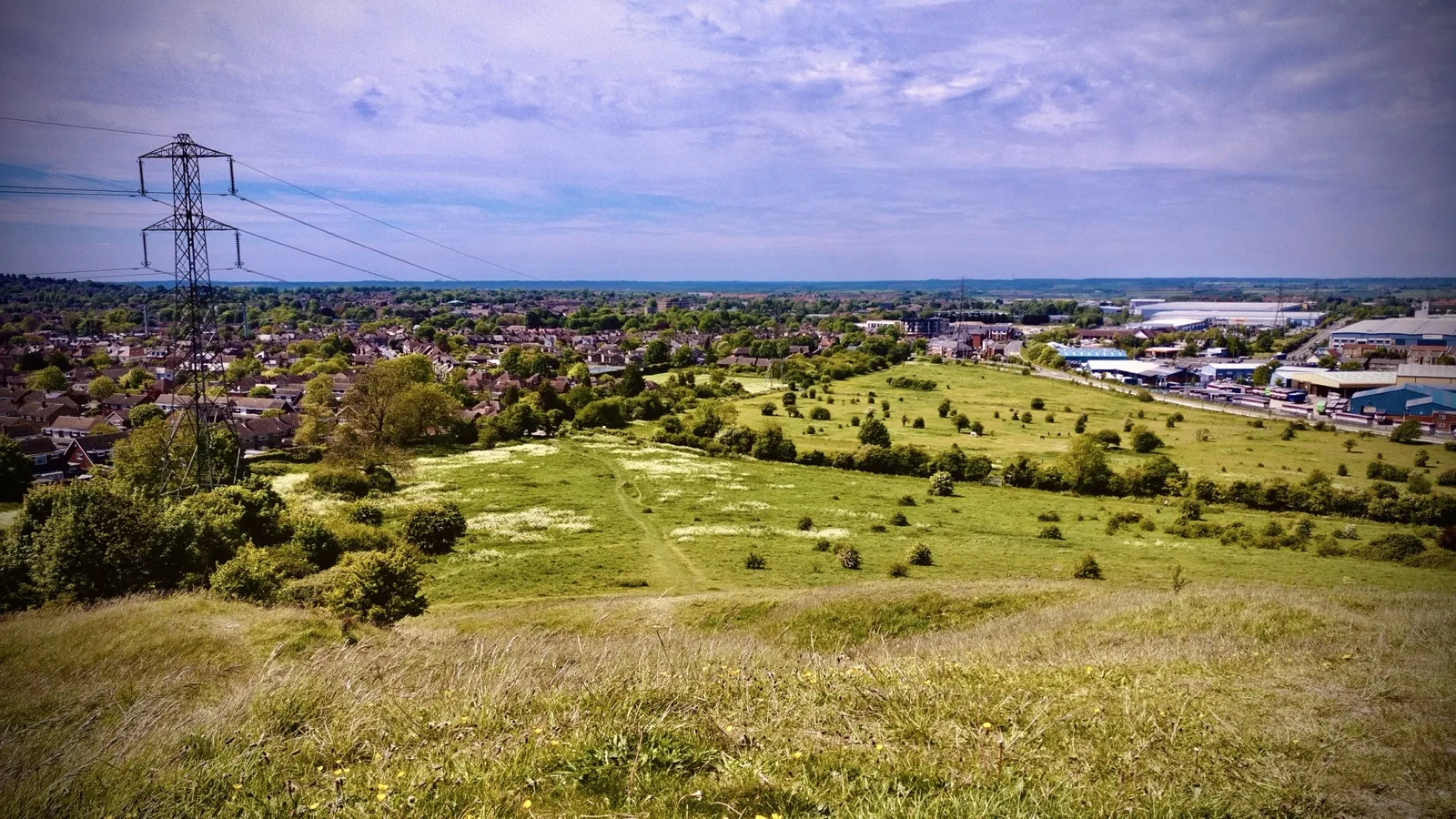
It is grazed with cattle and ponies. There is no car park; the Trust asks walkers to park considerately on nearby streets, and at right angles to the kerb at the Half Moon Lane entrance.
Address Half Moon Lane entrance, between Luton and Dunstable (OS grid TL 030 215)
Open at all times
Parking none; on-street nearby
Access mostly firm and dry, steep uphill; minor paths slippery when wet
Website wildlifebcn.org/nature-reserves/blows-downs
Good for views, steep climb, chalk grassland, dogs under effective control
Walks near Luton
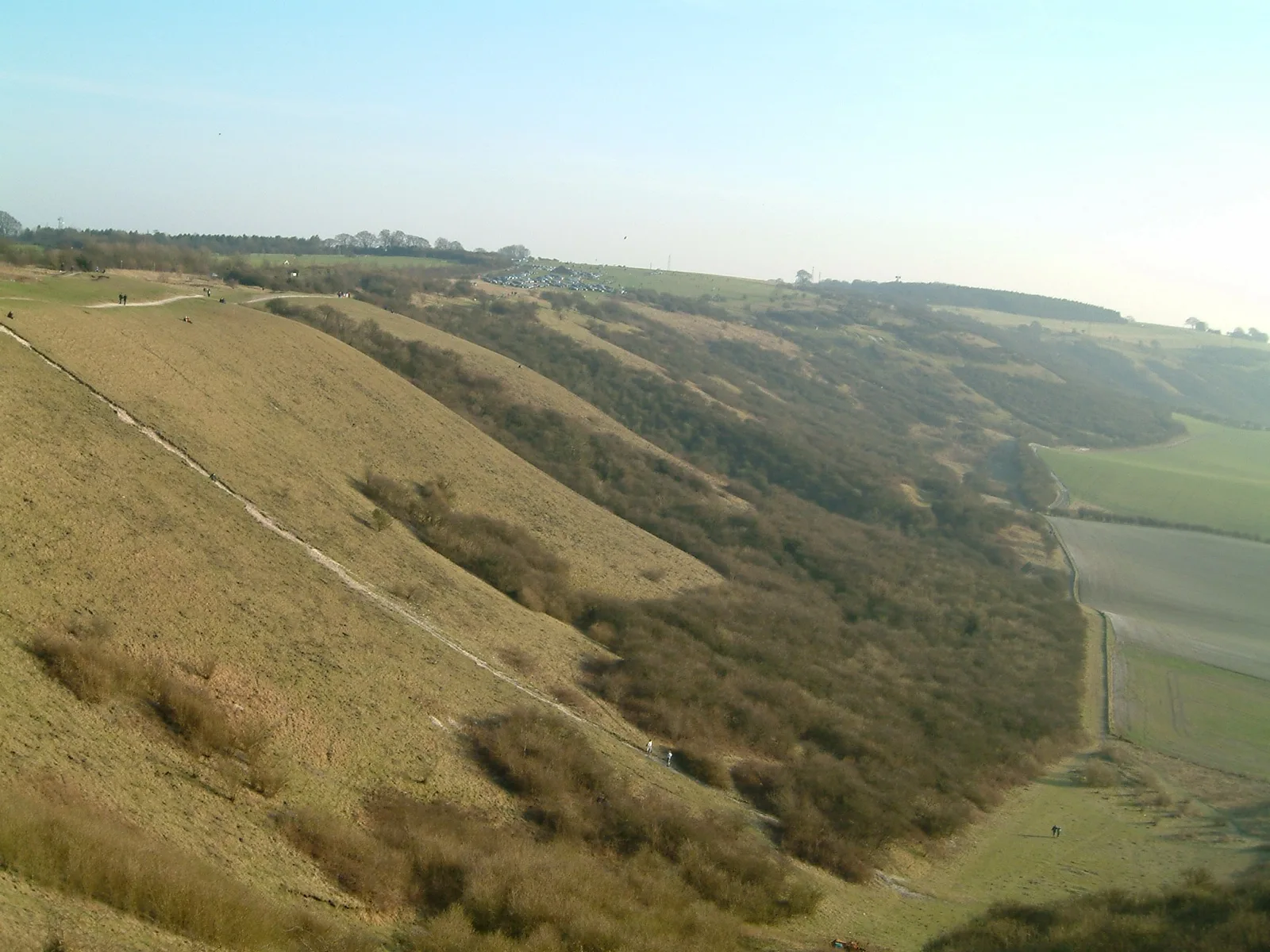
7. Dunstable Downs
The highest point in Bedfordshire and the region’s best-known Boxing Day walk, about 5.5 miles west of Luton. The National Trust looks after the chalk ridge, in the Chilterns, with miles of footpaths and several circular walks, the Five Knolls burial mounds and medieval rabbit warrens, both scheduled monuments.
It is the one walk in this guide with a cafe published as open on Boxing Day: the Trust’s calendar has The View Cafe and the Chilterns Gateway Centre open from 10am to 3pm on 26 December, and 10am to 4pm on the 27th. A multi-user path of over a kilometre runs from the centre towards Dunstable for buggies and wheelchairs.
Open Downs dawn to dusk on 26 December; The View Cafe and Chilterns Gateway Centre 10am to 3pm
Price parking £2.50 for 2 hours, £4.50 for 4 hours, £6 all day; free for National Trust members, Blue Badge holders and motorbikes
Address Chilterns Gateway Centre, off the B4541 (satnav LU6 2GY)
Call 01582 500920
Access multi-user path over 1km; accessible toilet in the main block
Website nationaltrust.org.uk/visit/essex-bedfordshire-hertfordshire/dunstable-downs-and-whipsnade-estate
Good for views, cafe open, kite flying, dogs on leads, buggies on the main path
8. Whipsnade Tree Cathedral
Trees, hedges and shrubs planted in the shape of a medieval cathedral after the First World War, in what the National Trust calls the spirit of “faith, hope and reconciliation”. It is free, quiet in winter and about 1.1 miles (20 minutes) from the Chilterns Gateway Centre: the Trust’s directions run south-west from the Downs to Sallowsprings lane and on to a signed entrance, so the two make one walk of about two and a half miles there and back.
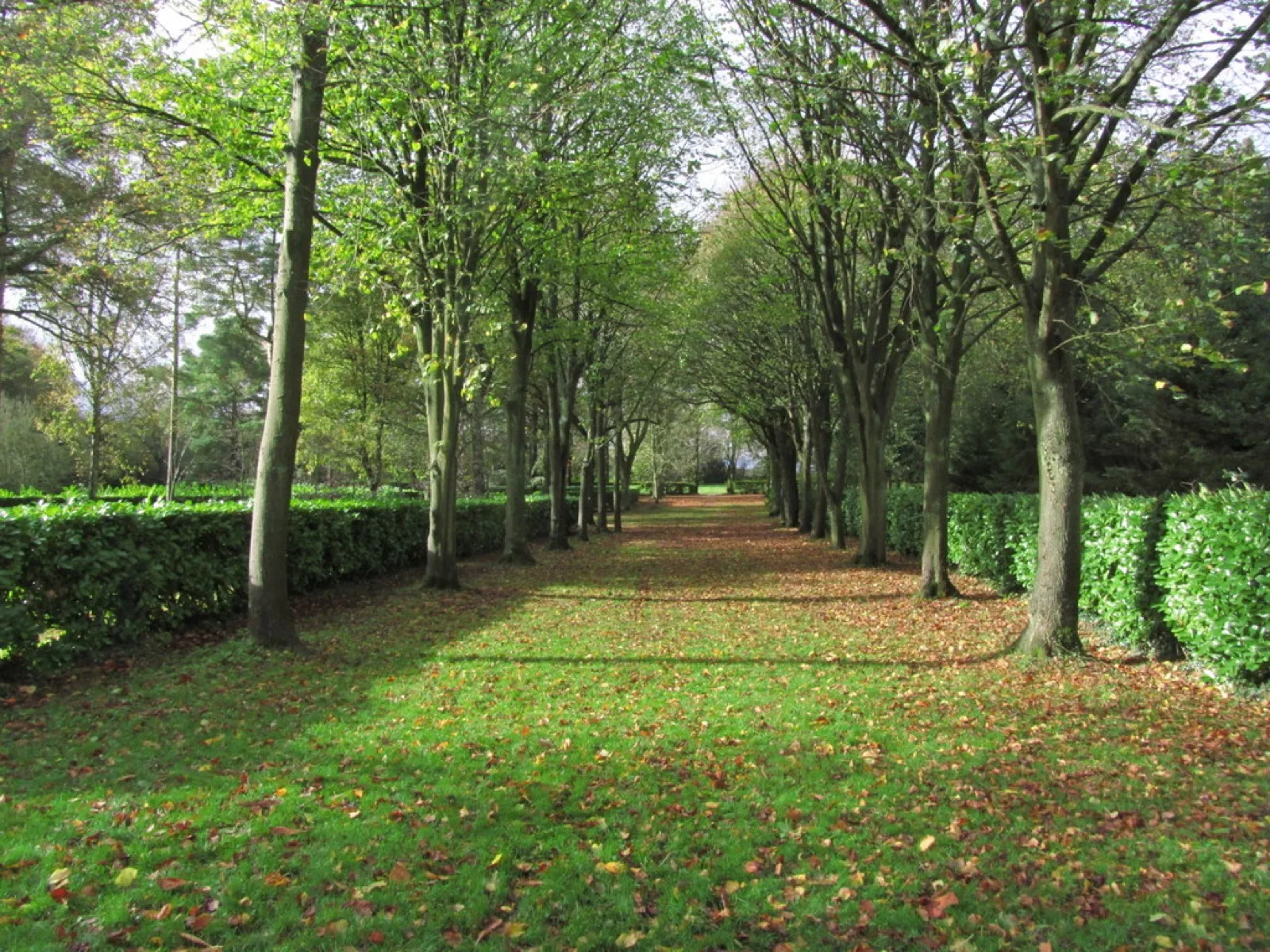
The small free car park is open from 7am to 5pm on Boxing Day, by the Trust’s calendar.
Open dawn to dusk; car park 7am to 5pm on 26 December
Price free entry and parking; spaces are limited
Address Bushey Close, Whipsnade LU6 2LQ
Website nationaltrust.org.uk/visit/essex-bedfordshire-hertfordshire/whipsnade-tree-cathedral
Good for quiet walk, free, links to Dunstable Downs, dogs on short leads
9. Sharpenhoe Clappers and Sundon Hills
About 5 miles north of Luton, where the Chilterns end in a steep chalk scarp above the Bedfordshire plain. The National Trust’s Sharpenhoe land runs across four areas, from Sundon Hills in the west through Moleskin and Markham Hills to Sharpenhoe Clappers and Smithcombe Hills, with the Icknield Way along the ridge.
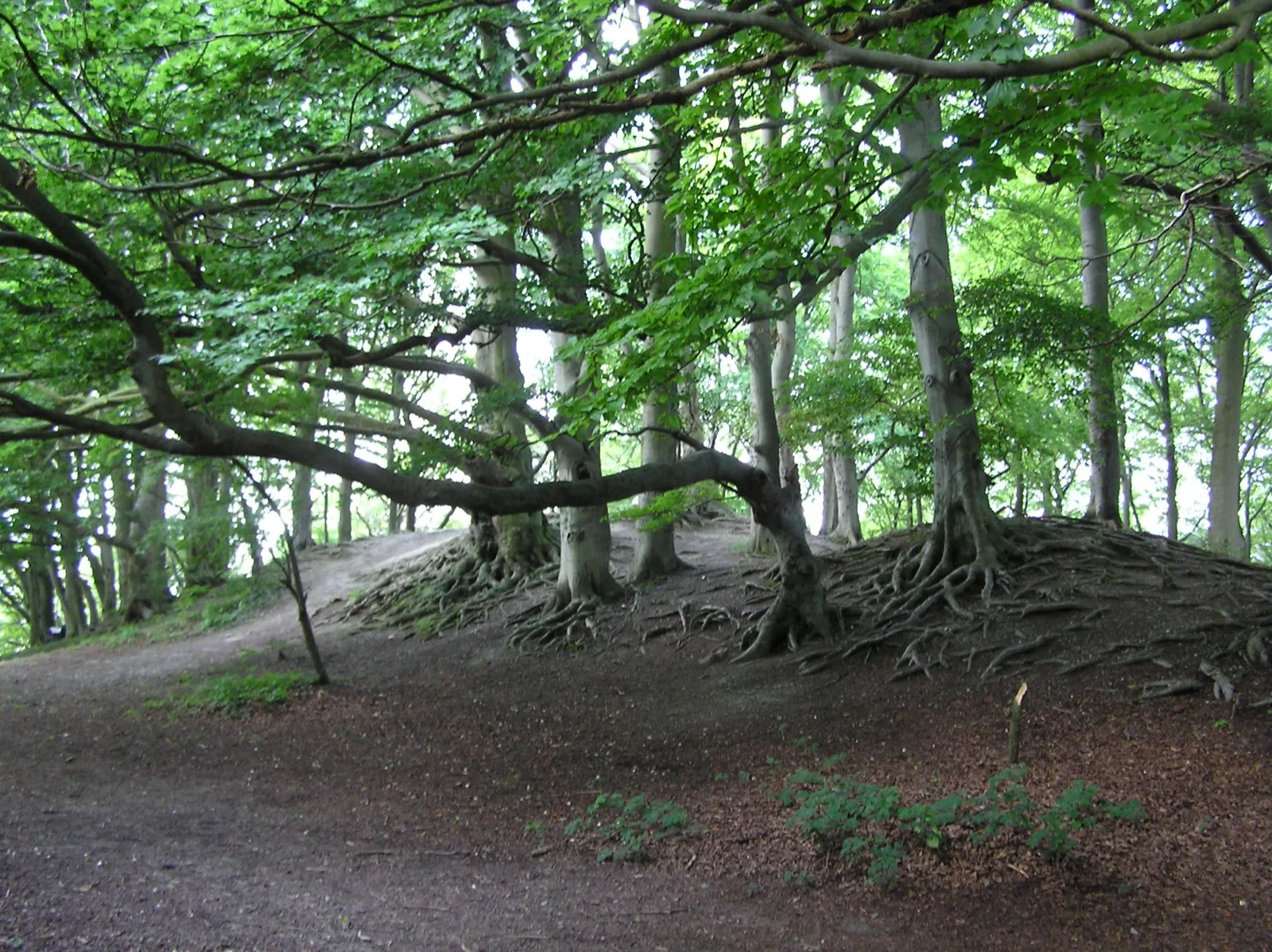
The Clappers, “reputedly haunted” in the Trust’s words, is crowned by traces of an Iron Age hill fort and a beech wood; the Trust suggests seeking out the old chalk quarry and walking the ridge for the views. There is no cafe or toilet, so bring a flask.
Open dawn to dusk
Parking Sharpenhoe Clappers car park, Sharpenhoe Road, Streatley; Sundon Hills car park, Harlington Road, Upper Sundon; height barrier 6ft 6in
Access steep chalk slopes and woodland paths
Website nationaltrust.org.uk/visit/essex-bedfordshire-hertfordshire/sharpenhoe
Good for beech wood, Iron Age hill fort, ridge views, Icknield Way
10. Pegsdon Hills and Hoo Bit
The Wildlife Trust calls Pegsdon “one of the jewels” of the Chilterns, about 5.5 miles north-east of Luton off the B655 to Hitchin: 79 hectares of steep chalk hills and quiet dry valleys with some of the best views in the county. Winter is when, the Trust says, fallow deer skirt the woodland edge and flocks of birds feed in the hedges.
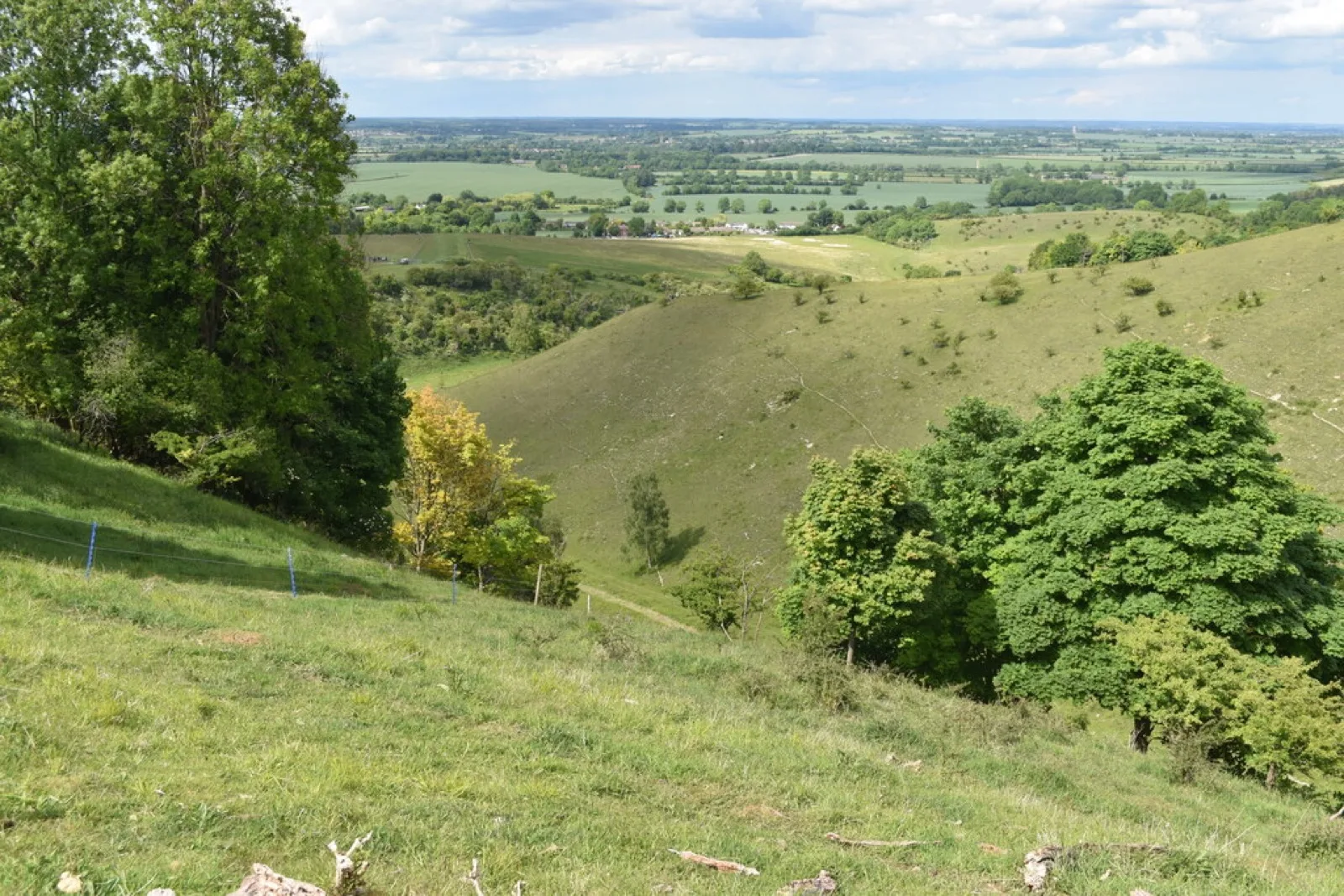
Look for the deep earthwork on the Bedfordshire and Hertfordshire boundary near the Icknield Way, now marked by big multi-stemmed beeches, and the strip lynchets left by an ancient settlement.
Address south of Barton Road (B655), Pegsdon SG5 3GS
Open at all times
Access steep and uneven tracks across the grassland
Website wildlifebcn.org/nature-reserves/pegsdon-hills-and-hoo-bit
Good for views, dry valleys, fallow deer in winter, dogs on a lead
11. Totternhoe Knolls
West of Dunstable, about 6.5 miles from Luton: the earthworks of a Norman motte and bailey castle above 31 hectares of chalk grassland that grew over medieval quarry spoil. The Wildlife Trust, which manages the reserve beside the National Trust’s knolls, says Totternhoe stone went into buildings including Westminster Abbey, and that the green lanes crossing the site are old drove roads along which livestock were taken to and from Dunstable.
It warns that the tracks are muddy in winter and the steep slopes slippery when wet.
Address Castle Hill Road, Totternhoe LU6 1QF
Open at all times; the National Trust lists dawn to dusk on 26 December
Price free
Access muddy in winter, steep slopes
Website wildlifebcn.org/nature-reserves/totternhoe
Good for Norman castle earthworks, views, quarry history, dogs on a lead
How we chose
These are the walks Luton people go back to, from the parks a short walk from home to the Chiltern hills on the town’s doorstep. Opening times and parking come from the National Trust’s own published calendar and car park notes, the parks pages of Luton Council and the Wildlife Trust for Bedfordshire, Cambridgeshire and Northamptonshire’s reserve pages. Distances are as the crow flies from the town centre. Run a place that should be here, or spot something that has changed? Email newsdesk@lutondaily.co.uk. Taken a good photograph of any of these places? Email it to newsdesk@lutondaily.co.uk and we will add it with your name as the credit.
For more ideas over Christmas, see things to do in Luton, what’s on in Luton this month and our guide to Christmas dinner in Luton.
Frequently asked questions
Where can I go for a Boxing Day walk in Luton?
Wardown Park is the easy one, a short walk up New Bedford Road from the town centre, with its lake and 1908 suspension bridge. For views, Galley and Warden Hills on the northern edge of town is Luton’s first nature reserve, and Stockwood Park and Kidney Wood give a longer walk in the south.
Is Dunstable Downs open on Boxing Day 2026?
Yes. The National Trust lists the Downs as open dawn to dusk on 26 December 2026, with The View Cafe and the Chilterns Gateway Centre open from 10am to 3pm. Parking is £2.50 for two hours, £4.50 for four or £6 for the day, and free for National Trust members and Blue Badge holders.
Can I get to these walks by train on Boxing Day?
Not easily. Boxing Day 2026 is a Saturday, East Midlands Railway runs no trains that day, most other operators run none and the Luton DART is closed on 25 and 26 December. Walk from home, drive, or save the linear walks for Monday 28 December, the bank holiday.
Have your say